
At Magura Agriculture Park Limited (MAPL), we follow a clean and sustainable dairy farming model designed for better animal health, higher milk quality, and a safer environment. Our goal is simple: produce pure milk while reducing our impact on nature. Therefore, every daily activity is planned with care and responsibility.
What Sustainability Means for MAPL
Sustainability is not one action. Instead, it is a series of small steps done every day.
We try to use fewer chemicals, save water, and reduce waste across the farm.
As a result, our dairy unit becomes cleaner and more efficient.
Moreover, this system helps us protect soil, air, and water—three things that support long-term farming success.
Creating a Clean and Healthy Farm Environment
A clean space leads to healthy cows.
Therefore, our team maintains daily cleaning routines to remove dirt and maintain hygiene.
We also improve airflow by keeping sheds open and well-ventilated.
This reduces heat stress, which is a major concern in Bangladesh’s warm climate.
In addition, proper drainage ensures that waste does not collect around the cow sheds.
As a result, cows stay healthier and infections remain low.
Cow Comfort Is Always the First Priority
Comfort is a key part of sustainable dairy farming.
At MAPL, cows have enough room to move freely.
We give them soft bedding that is changed regularly.
Also, we maintain quiet surroundings to reduce stress.
Because stressed cows produce less milk, comfort directly affects productivity.
Therefore, our farm design focuses on natural light, proper airflow, and low-noise handling.
A Better Feeding System for Better Milk
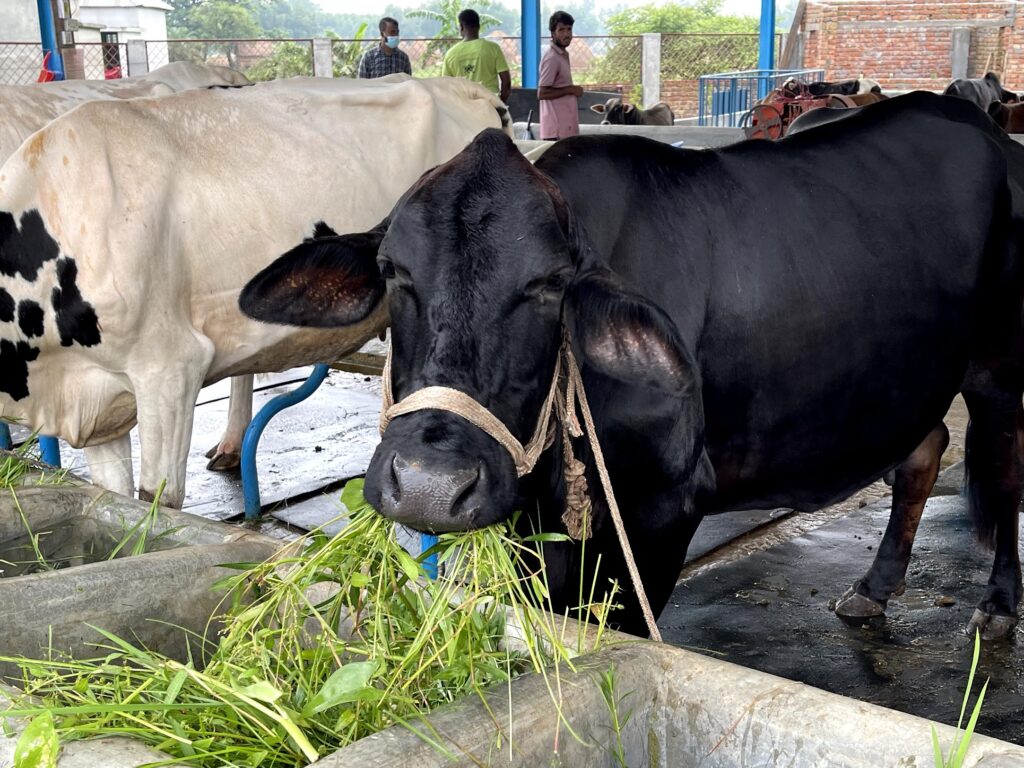
High-quality feed is essential for good milk.
MAPL grows part of its cattle feed using eco-friendly methods.
As a result, cows receive fresh, chemical-free grass throughout the year.
We also prepare balanced rations with essential minerals.
This helps improve digestion, boosts energy, and increases milk yield naturally.
In addition, clean drinking water is always available, which further improves milk purity.
Waste Management That Protects Nature
Sustainable farming also means smart waste management.
Instead of letting cow dung go to waste, we convert it into vermicompost.
This compost improves soil fertility and reduces the need for chemical fertilizers.
Furthermore, we recycle wastewater for cleaning sheds and pathways.
As a result, we save water and lower our environmental footprint.
This cycle supports both the farm and the surrounding fields.
Safe, Hygienic Practices in Every Step of Milk Handling
Milk quality depends on cleanliness.
Therefore, our milking tools and hands are cleaned before each session.
After milking, the milk is filtered and chilled immediately.
This keeps the milk fresh and slows bacterial growth.
We also use clean containers and hygienic packaging.
Finally, our transport system ensures that the milk reaches customers in safe condition.
Training and Community Support
Sustainable farming becomes stronger when communities are involved.
Therefore, MAPL trains local workers in modern dairy practices.
This raises awareness and gives people better job opportunities.
In addition, we support small farmers by sharing knowledge on feed, hygiene, and composting.
As a result, the community grows along with the farm.
Technology Supports Our Sustainability Goals
MAPL uses simple but effective technology to monitor farm activities.
For example, temperature checks help us prevent heat stress.
Also, milking tools are improved over time for better hygiene.
These small upgrades create long-term benefits for milk quality.
Why MAPL’s Model Is the Future of Dairy Farming
Consumers today want clean, pure, and safe milk.
Therefore, sustainable farming is not just a trend—it is a necessity.
MAPL aims to protect cows, customers, and nature at the same time.
As a result, we create a reliable system that benefits both people and the environment.
In the long run, this approach helps build trust and supports the growing demand for eco-friendly dairy products in Bangladesh.
Leave a Reply